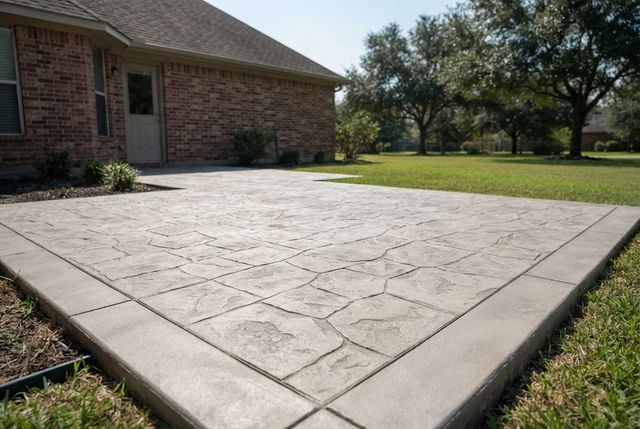
Stamped Concrete
Stone, slate, brick and wood patterns with color, for patios, walkways, driveways and pool decks.

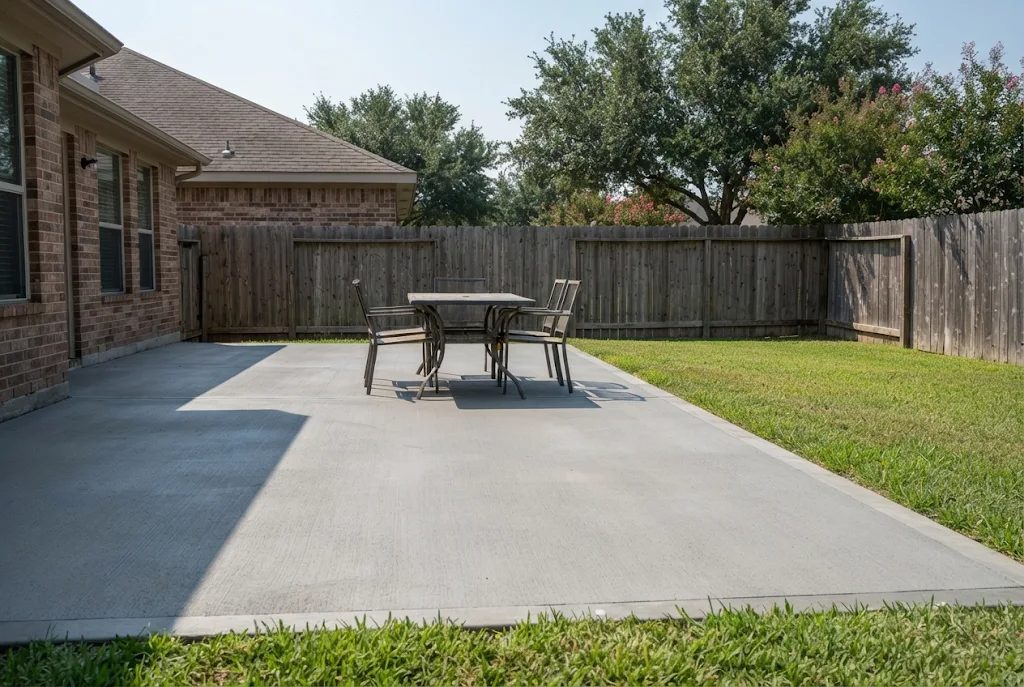
Backyard patios and porch slabs built for outdoor living in Gulf Coast heat, humidity and rain. Sized to your layout, finished for traction and drained away from your home.
A patio changes how a house lives. In the Houston area that usually means shade, a ceiling fan, a grill, maybe a fire pit, and room for a table that seats everyone when the weather finally cools down. Concrete is the foundation for all of it: durable, easy to clean and flexible enough to follow nearly any shape you draw.
We build patios for homes across Pasadena and nearby cities, from a simple slab off the back door to a wide L-shaped patio that wraps the house and ties into a driveway or walkway. If you want the look of stone, brick or wood, see stamped concrete for decorative options.
Rectangles, curves, steps and walkways can all be formed. We lay it out with you before anything is poured.
The slab is sloped so rain runs toward the lawn or a drain instead of ponding against the house.
An isolation joint lets the patio and the house move independently, which matters on clay soil.
A light broom finish in a light color stays cooler than dark, smooth surfaces in the summer sun.
Footings for a cover, pergola or outdoor kitchen can be planned into the pour so you do not have to cut into new concrete later.
Sweeping and a periodic rinse handle most of it, with no staining or sealing schedule required unless you want one.
We walk the yard, talk through how you will use the patio and mark a proposed outline.
Size, shape, finish, color, steps and any future structures are settled and written down.
The area is cleared and graded to the right slope, then the base is compacted.
Forms shape the edges, reinforcement goes in, and the isolation and control joints are planned.
Concrete is placed, screeded, floated and finished with the texture or color you chose.
The slab cures before furniture and grills go on. You get clear guidance on timing.
Share your idea and get a free estimate.
Pasadena is flat and the rain can be heavy, so drainage is the first design question. A patio should fall away from the house, typically about a quarter inch per foot, toward lawn, a swale or a drain. Without that slope, water sits against the slab edge, where it can saturate the clay near your foundation. A patio should also not block the yard's existing drainage paths.
Texas sun heats a patio quickly. Light gray concrete with a broom finish stays cooler than dark stains and smooth finishes, and shade from a cover or a live oak helps more. If you want color, light to medium tones are easier on bare feet in July.
A patio sits close to your house, so the joint between them matters. A flexible isolation joint, a well-prepared base and no concrete locked rigidly against the foundation help keep the patio's movement from pushing on the house. If you plan a roof structure, an outdoor kitchen or a hot tub, tell us up front, because those loads change the slab and footing design.
See everywhere we work on our Pasadena service area page, or contact us to talk through your project.
Brushed lines give reliable traction when wet. It is the practical default for most outdoor living areas.
Color mixed into the concrete or applied after the pour gives a warmer, more finished look than plain gray.
Decorative saw cuts form squares or bands, adding a designed look without changing the surface texture.
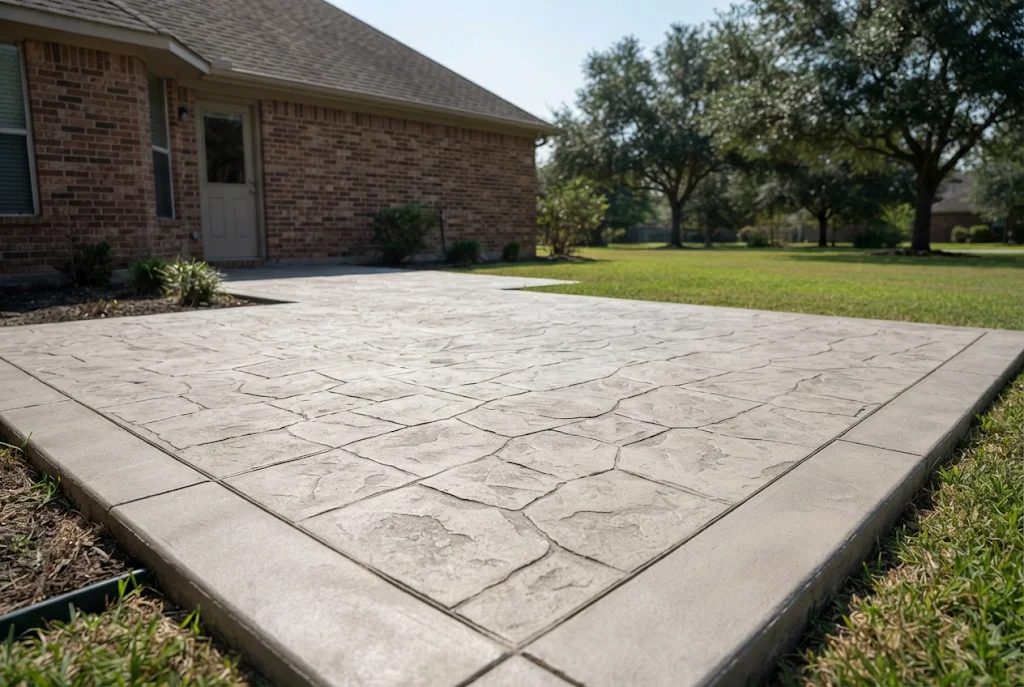
Stone, slate, brick and wood textures pressed into colored concrete. See stamped concrete.
A common starting point is about 12 by 12 feet for a table that seats four to six, with room for chairs to pull out. Add space if you want a grill zone or a lounge area. Setting out the real furniture or chalking an outline on the grass is the easiest way to judge size.
Yes, but it should not be rigidly attached. A compressible isolation joint separates the patio from the house, and the surface must slope away from the walls so water does not run toward the foundation.
Reinforcement helps hold cracks tight if the concrete does crack. We recommend it for most patios, particularly on clay soil, and your estimate will say what is included.
Yes, but it is easier and cheaper to plan the footings now than to cut into a finished slab. Tell us what you might add and we will build the slab and footings with that in mind.
A broom finish gives good traction. Smooth troweled surfaces can be slick outdoors, so we recommend a broom or textured finish for patios and walkways.
Light foot traffic is usually fine after a day or so. Lighter furniture can often go on after a few days, and heavy items such as grills, planters or a hot tub should wait longer. We give you timing based on your pour and the weather.
Shaded, humid patios can grow green algae or mildew. Sweep regularly, rinse with a hose and use a mild outdoor cleaner when needed. Avoid aggressive pressure washing, which can roughen the surface.
Many projects combine more than one service. These pages may help.
Stone, slate, brick and wood patterns with color, for patios, walkways, driveways and pool decks.
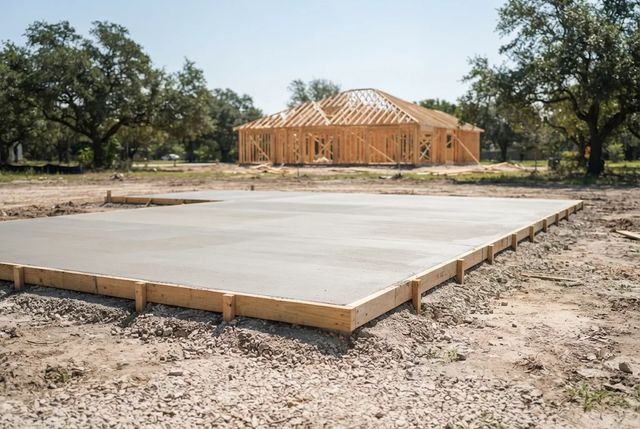
Level, reinforced slabs for sheds, garages, carports, workshops, A/C units and equipment.
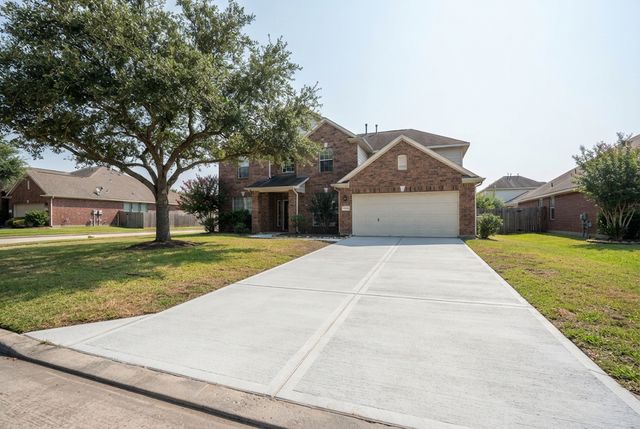
New driveways, replacements and extensions with solid base prep, planned joints and a non-slip broom finish.
See all concrete services or check our Pasadena service area.
Tell us about your project and we will follow up to talk through the details and set up a time to look at the site. Prefer to talk now? Call anytime.
Tell us a little about the project. We will contact you using the phone number you provide.