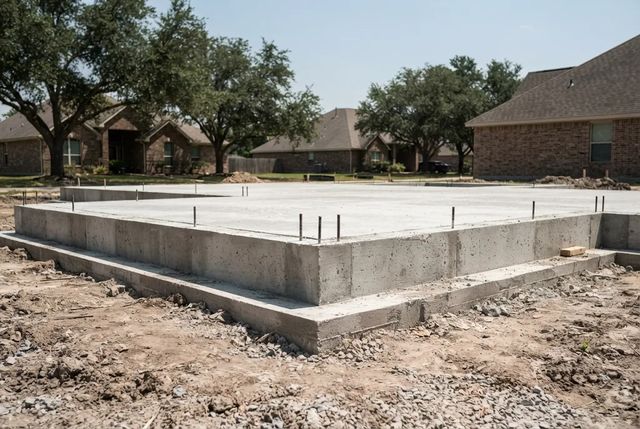
Concrete Foundations
Footings, stem walls and slab-on-grade foundations for additions, garages, workshops and small buildings, built to plan.

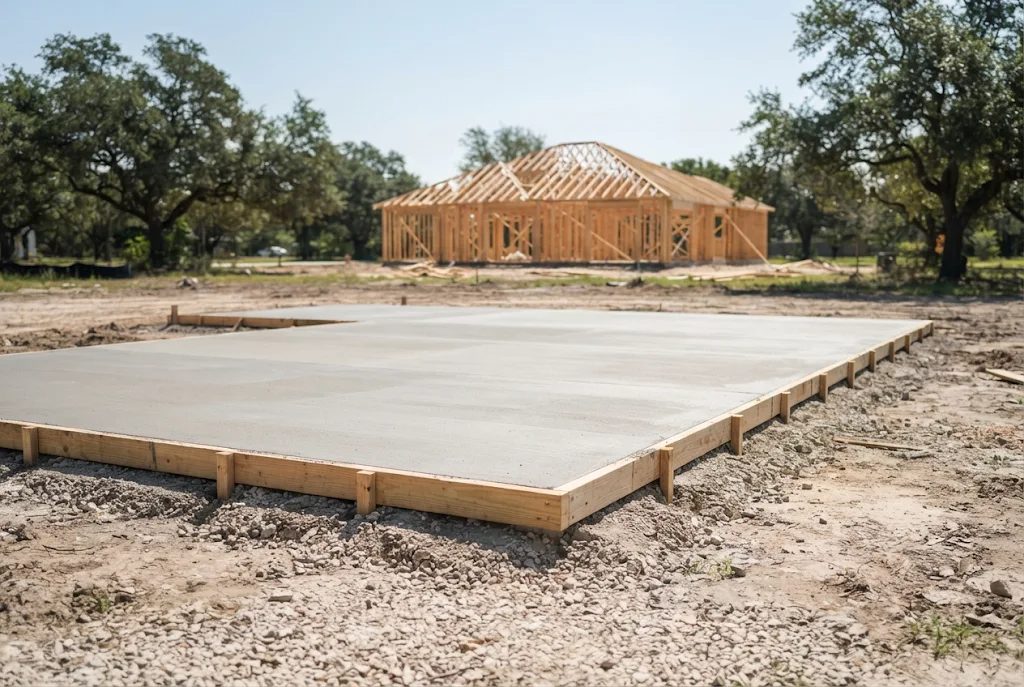
Level, reinforced slabs for sheds, garages, carports, workshops, generators and air conditioners. Poured to last on Gulf Coast clay.
Slabs carry a workshop, keep a shed off wet ground, give a generator or air conditioner a stable pad and hold up a carport or an RV. Because they sit on the same expansive clay as everything else in Pasadena, the details underneath, namely the base, thickness, edges and steel, decide whether a slab stays level or tilts and cracks.
Our slab work covers residential and light commercial uses, from small equipment pads to large garage and workshop floors. For slabs that will carry a building with walls and a roof, see concrete foundations, which follow engineered plans. For slabs that are part of a parking or walking area, see light commercial concrete.
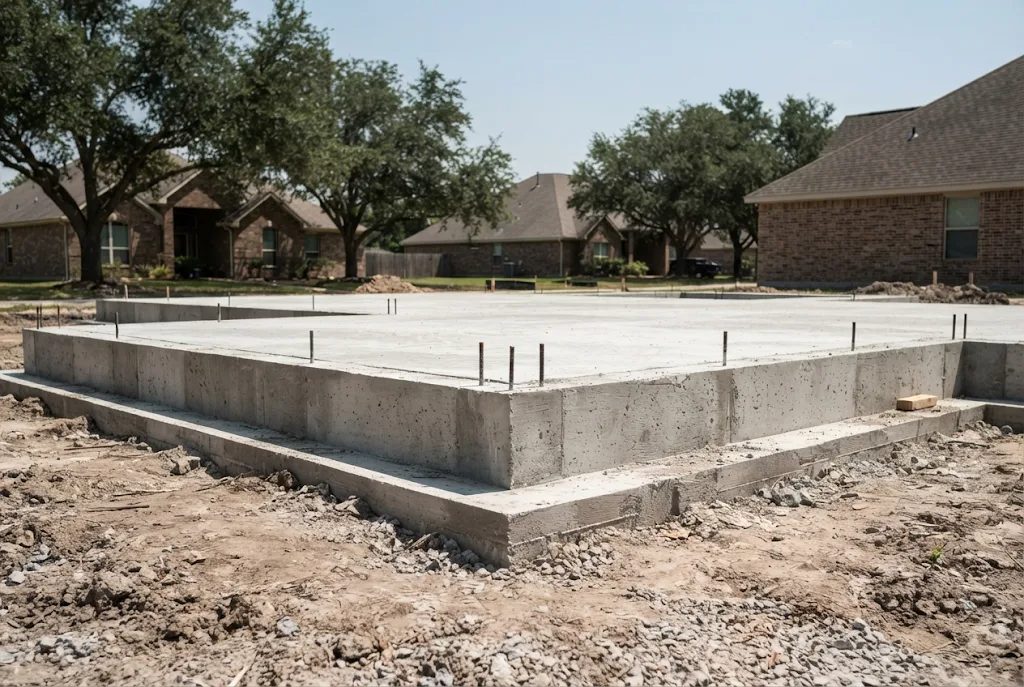
Accurate forms and screeding mean a slab you can build on, set equipment on or park on without chasing high and low spots.
Thickened edges and the right reinforcement help a slab carry weight without breaking at the perimeter.
A compacted gravel base, and a vapor barrier for enclosed slabs, helps keep ground moisture out of your space.
Thickness runs from about 4 inches for light use upward for vehicles and heavy equipment.
Anchor bolts, conduit, sleeves and drains can be set before the pour so nothing has to be cut into the concrete later.
Broom finish for outdoor traction, or a smoother trowel finish for an enclosed shop or garage.
We look at where the slab will go, how water moves across the area and what it needs to carry.
Dimensions, thickness, finish and any embedded items are written into the scope.
The pad area is cleared and graded, and a compacted base goes down.
Forms set the shape and finished height. Steel is supported so it sits in the slab, not on the dirt.
Concrete is placed and leveled, then floated and finished. Control joints are cut early enough to guide shrinkage cracks.
The slab cures before the shed, vehicle or equipment goes on. You get timing based on the load.
Send us the size and use and get a free estimate.
On clay, the biggest risk is uneven moisture. A shed slab with bare dirt on one side and a gutter downspout on the other will see very different soil moisture, and the slab can tilt. We look at how water moves across the site, including downspouts, low spots and ditches, and set the slab height and base to keep water moving away. A slab raised slightly above the surrounding grade stays drier and is easier to keep clean.
Much of Pasadena is flat, with limited natural drainage, and after heavy rain water can stand in a yard for a while. A slab built flush with the ground can end up wet. Where practical, we recommend setting it above the surrounding grade. If your property floods, ask for a plan that accounts for it.
Heat adds its own challenge on large pours, because concrete sets faster in summer. Large slabs are finished and jointed on a schedule, and control joints are cut soon after finishing to guide shrinkage cracks to planned lines.
See everywhere we work on our Pasadena service area page, or contact us to talk through your project.
A level slab keeps a shed off damp ground and gives it a stable base that will not rot or settle like wood skids.
Thicker slabs with reinforced edges for vehicles, lifts and shop equipment, with a finish to suit the space.
Compact pads for air conditioners, generators, pool equipment and water systems, sized to the equipment and set above the grade.
Heavy-duty pads with the thickness and reinforcement to handle long-term loads.
About 4 inches is common for sheds and light use. Garages, workshops and slabs that carry vehicles or heavy equipment often call for 5 to 6 inches with thickened edges and more reinforcement. We recommend a thickness based on what the slab will carry.
Sometimes. Small detached slabs may fall below a city's thresholds, but slabs that support a building, include plumbing or electrical, or sit near easements can require approval. Check with the City of Pasadena for your address, and we will tell you what to ask.
For an enclosed slab such as a garage or workshop, a vapor barrier under the concrete helps keep ground moisture out. For an open outdoor pad it is usually not necessary.
It depends on the slab's thickness, reinforcement and base. Tell us the weights involved and we will size the slab for them.
A foundation is engineered to support a building and designed to handle soil movement. A slab for a shed, pad or parking area is lighter-duty. If walls and a roof will sit on it, you need a foundation built to plans.
Yes, but roots and slabs compete for moisture, and large roots can lift concrete over time. Keep slabs clear of large trees where you can, and talk to an arborist before cutting any significant roots.
Site prep and forming often take a day or two, and the pour itself is usually done in a day. Curing continues for days, and heavy loads should wait about a week or more. Weather and access can change the schedule.
Many projects combine more than one service. These pages may help.
Footings, stem walls and slab-on-grade foundations for additions, garages, workshops and small buildings, built to plan.
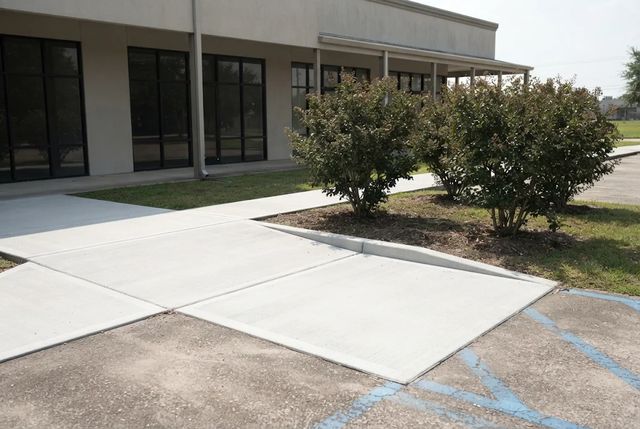
Sidewalks, curb ramps, parking pads, dumpster pads and equipment slabs for small businesses and property managers.
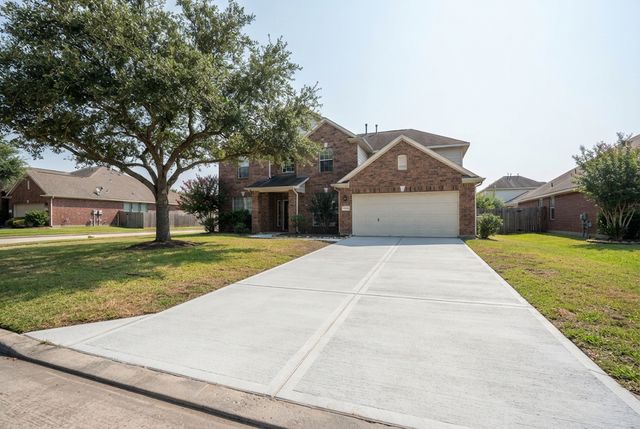
New driveways, replacements and extensions with solid base prep, planned joints and a non-slip broom finish.
See all concrete services or check our Pasadena service area.
Tell us about your project and we will follow up to talk through the details and set up a time to look at the site. Prefer to talk now? Call anytime.
Tell us a little about the project. We will contact you using the phone number you provide.