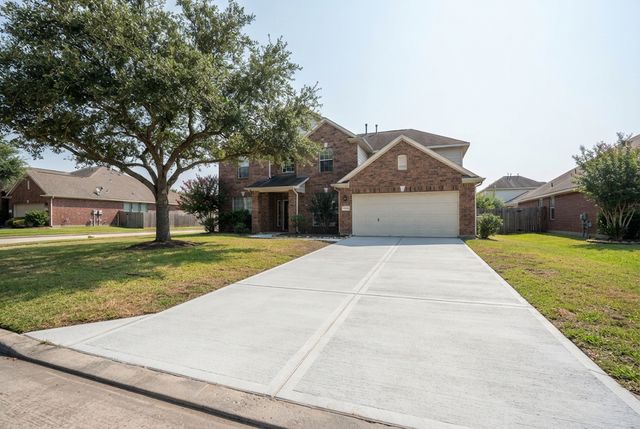
Concrete Driveways
New driveways, replacements and extensions with solid base prep, planned joints and a non-slip broom finish.

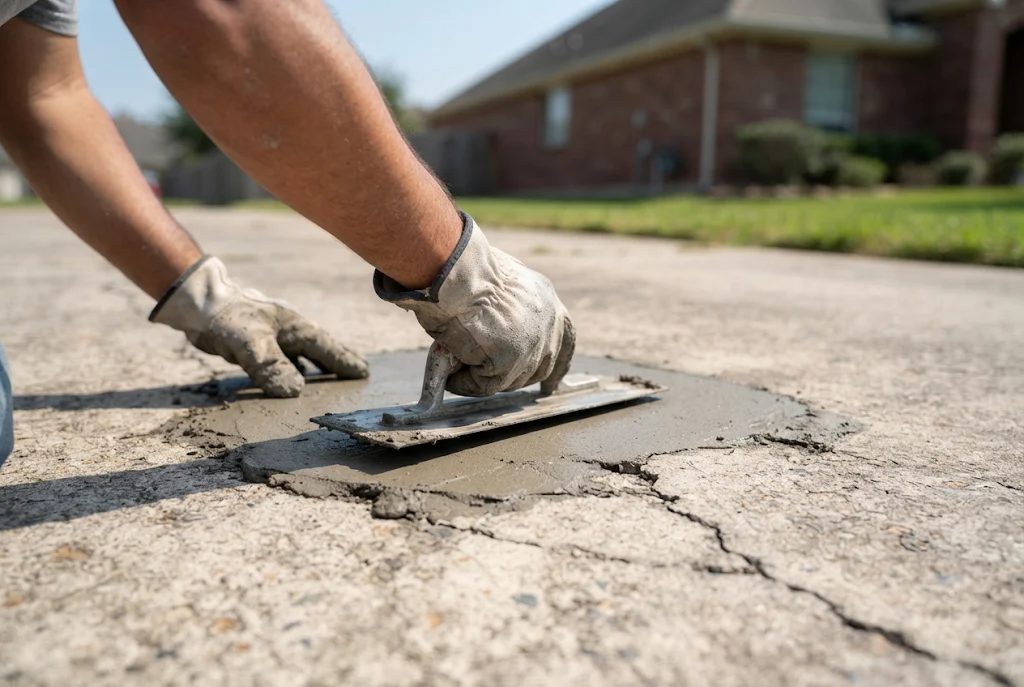
Cracks, flaking surfaces, trip hazards and worn slabs on driveways, sidewalks, patios and garage floors, repaired honestly or replaced when repair will not hold.
Concrete that looks bad has not always failed. A hairline crack that follows a joint may only need sealing, while a settled panel that tilts toward your garage needs a different answer. The first step in any repair is working out why the concrete cracked or moved, because fixing the surface without fixing the cause means doing the job twice.
We repair residential and light commercial flatwork: driveways, walkways, patios, garage floors, porches, steps and curbs. When repair makes sense we will say so. When a section is past repair we will say that too and give you the replacement option, including a new driveway or patio.
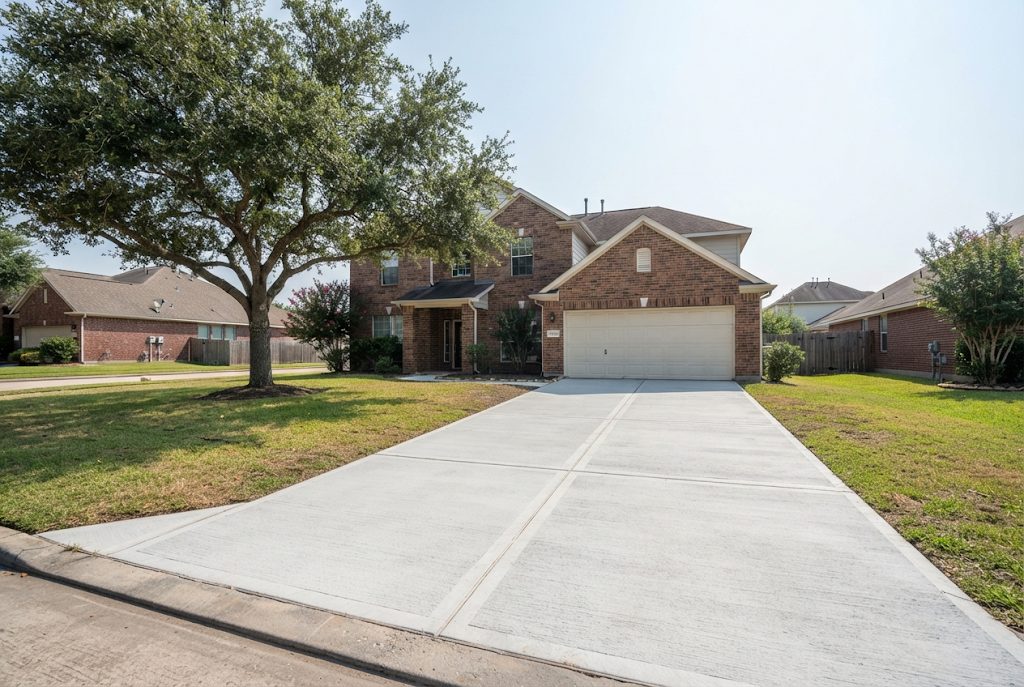
Soil movement, drainage, roots and a failed base each need a different fix, so we look before we patch.
Hairline cracks, wide cracks, spalls and sunken panels are not all repaired the same way.
Lifted or uneven sections that cause trips are corrected, which matters for a family and for a business entrance.
Sealing cracks and joints helps keep water out of the base, where it does the most damage.
If the slab is basically sound, a repair costs far less than replacing it.
Repairs are finished and blended so they look intentional, not like an afterthought.
We look at the concrete, the surrounding drainage and the likely cause, and explain what we see.
You get the recommended fix, any alternatives, and a price for each.
Loose material is removed and cracks and surfaces are cleaned so the repair bonds.
Cracks are sealed or injected, spalls are patched, or damaged panels are removed and replaced.
The repair is finished to match the texture around it as closely as the material allows.
You get guidance on cure time, cleaning and how to keep water away from the area.
Get an honest look and a free estimate.
Soil movement is the number one cause. The clay under Pasadena swells with rain and shrinks in dry spells, and slabs ride up and down with it. Edges and corners move the most because they lose and gain moisture on two sides. That is why you often see cracking at the edges of driveways, sidewalks and patios first.
Tree roots are the second most common cause, and live oaks are everywhere in the area. Roots can lift sidewalk and driveway panels. Cutting large roots can harm the tree, so replacing the panel and managing the roots with an arborist's advice is the safer path.
Water is the third. Downspouts that discharge onto slab edges, leaking irrigation lines and poor grading can wash out the base under a slab. If the water problem is not fixed, the repair will not last, which is why we look at drainage as part of every estimate.
See everywhere we work on our Pasadena service area page, or contact us to talk through your project.
| What you see | What it often means | Typical repair |
|---|---|---|
| Hairline crack that follows a joint | Normal shrinkage as the concrete cured | Clean and seal with a flexible sealant |
| Wide or uneven crack, one side higher | Soil movement, a void under the slab or root pressure | Find the cause, then repair or replace the panel |
| Flaking, peeling or pitted surface | Surface wear, poor finishing or moisture damage | Resurfacing or an overlay |
| Sunken or tilted panel | A washed-out or settled base | Replace the panel and fix the water source |
| Cracking where a patio meets the house | Movement between the slab and the house, often a missing isolation joint | Re-seal or re-cut the joint, correct drainage |
Repairs seal and stabilize cracks, but they rarely make them vanish. We blend and finish repairs so they are as discreet as possible, and you should expect a faint line in many cases.
When cracking is widespread, panels have settled or the base has washed out. Patching over a failing base keeps failing, so replacing the slab is often the longer-lasting and better-value answer.
Sometimes lifting is an option for a sunken slab, but replacement is often more reliable, especially if the base is the problem. We evaluate the slab and recommend what fits.
It depends on the cause. A crack sealed after normal shrinkage can hold for years. A repair where the cause is still active, like a leaking downspout or an expanding root, will fail until the cause is fixed.
Usually not structurally, but cracks let water in. Sealing them helps protect the base. Cracks that are widening, stepping or letting one side sit higher than the other deserve a closer look.
Yes. Cracks and chipped areas in a garage floor can be repaired. A garage coating is a separate step and can be added after the repair.
Cosmetic cracks in garage floors and flatwork are repairable. Cracks in the foundation under the house that come with sticking doors, sloping floors or stair-step cracks in brick are a structural question, and a structural engineer should evaluate them first.
Many projects combine more than one service. These pages may help.
New driveways, replacements and extensions with solid base prep, planned joints and a non-slip broom finish.
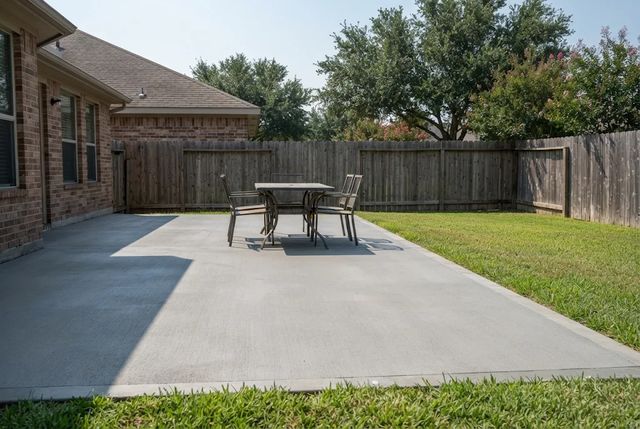
Backyard patios, porch extensions and outdoor living slabs sized to your layout and drained away from the house.
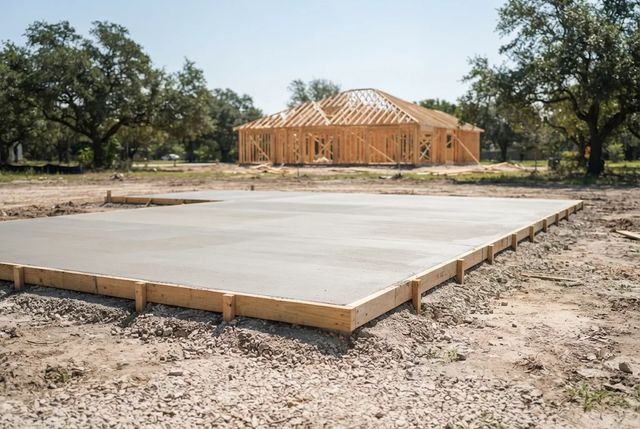
Level, reinforced slabs for sheds, garages, carports, workshops, A/C units and equipment.
See all concrete services or check our Pasadena service area.
Tell us about your project and we will follow up to talk through the details and set up a time to look at the site. Prefer to talk now? Call anytime.
Tell us a little about the project. We will contact you using the phone number you provide.